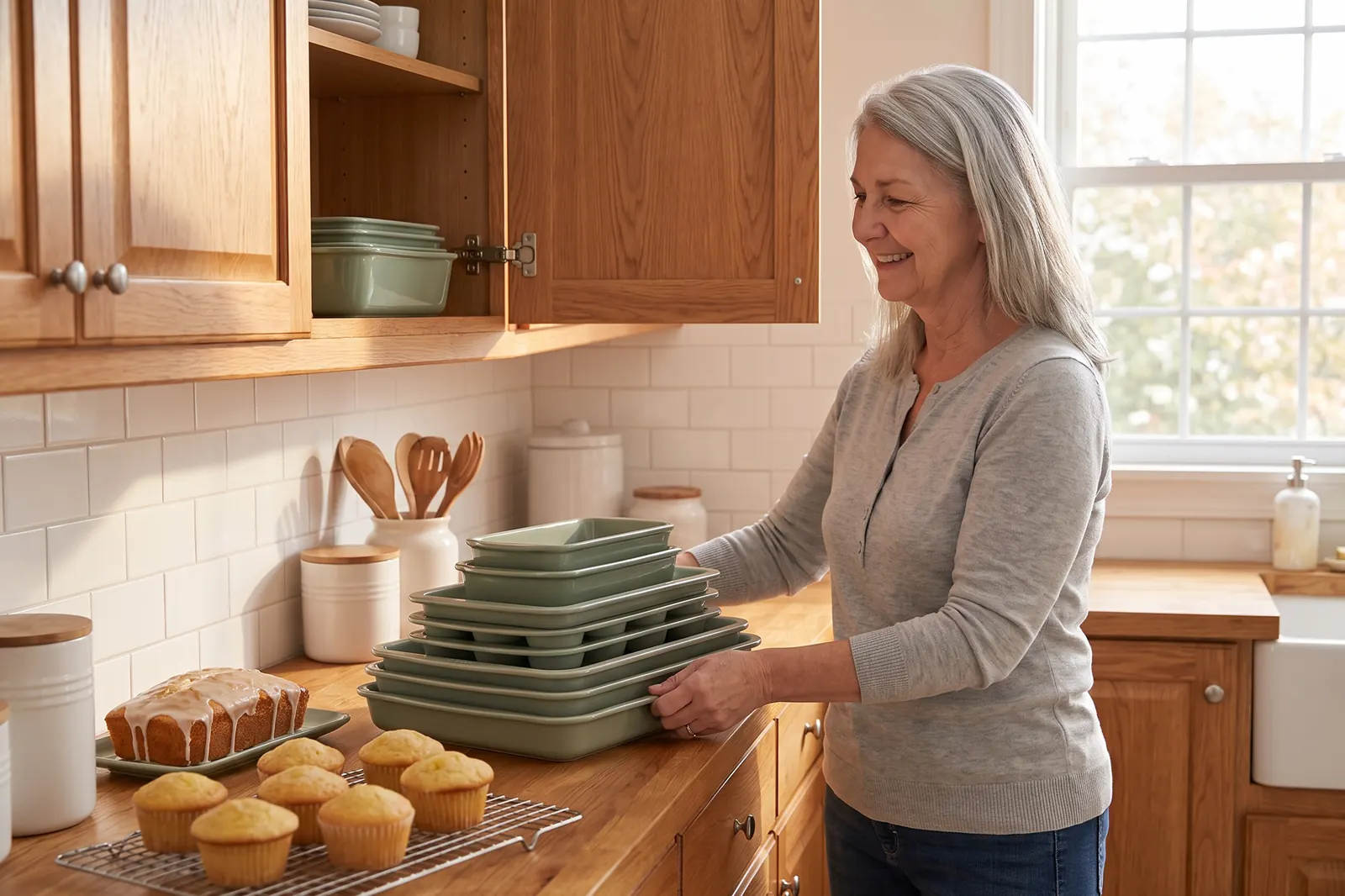
Every Pan in One Cabinet, and No More Clatter: A Calmer Way to Store Cookware
The clatter of a crowded cookware cabinet is a fixable problem. Start by editing, then stack with a plan.
Home · Table · Weekend
Cast iron has a reputation for being fussy. In practice it asks for very little, as long as you know the few things that matter.
A well-kept cast iron pan can outlast the person who bought it. The rules people pass around can make it sound delicate, but the routine is short: clean it, dry it completely, and give it a thin coat of oil.
Clean the pan while it is still warm. Hot water and a brush or scraper handle most messes. A small amount of mild dish soap is fine on a seasoned pan; modern soaps will not strip seasoning the way old lye soaps could. What does damage cast iron is soaking it for hours or putting it in the dishwasher, so skip both.
For stuck-on food, add a spoonful of coarse salt and scrub with a folded paper towel, then rinse.
Water is the real enemy, because it leads to rust. Towel the pan dry, then set it on a burner over low heat for a minute or two until every trace of moisture is gone.
While the pan is still warm, rub in a few drops of neutral oil with a paper towel, then wipe it again as if you were trying to remove it all. A heavy coat turns sticky. The goal is a sheen, not a film.
The best seasoning comes from use. Searing, roasting and shallow frying all build up the dark, slick surface over time. Very acidic dishes simmered for a long time, like tomato sauce, can wear seasoning down on a newer pan, so save those for once the surface is well established.
Rust is not the end. Scrub the spot down to bare metal with steel wool, wash, dry on the stove, then rub a thin layer of oil over the whole pan, inside and out. Bake it upside down in a hot oven for about an hour and let it cool inside. Repeat once or twice if the surface still looks dull.
Store the pan dry, somewhere with airflow. If you stack other pans inside it, a paper towel or pan protector between them prevents scratches and soaks up any humidity.
This is an editorial guide. It is not sponsored, and no brand paid to appear in it.
The clatter of a crowded cookware cabinet is a fixable problem. Start by editing, then stack with a plan.
Black flecks in my husband's dinner, a cabinet of worn-out pans, and my mother's pot still going strong after decades. Then I finally understood why.
Thirty years of crashing pans, a ruined muffin morning with my granddaughter, and one cookie swap I'd rather forget. Then my friend Carol opened her cabinet, and it took her four seconds.